Research Overview
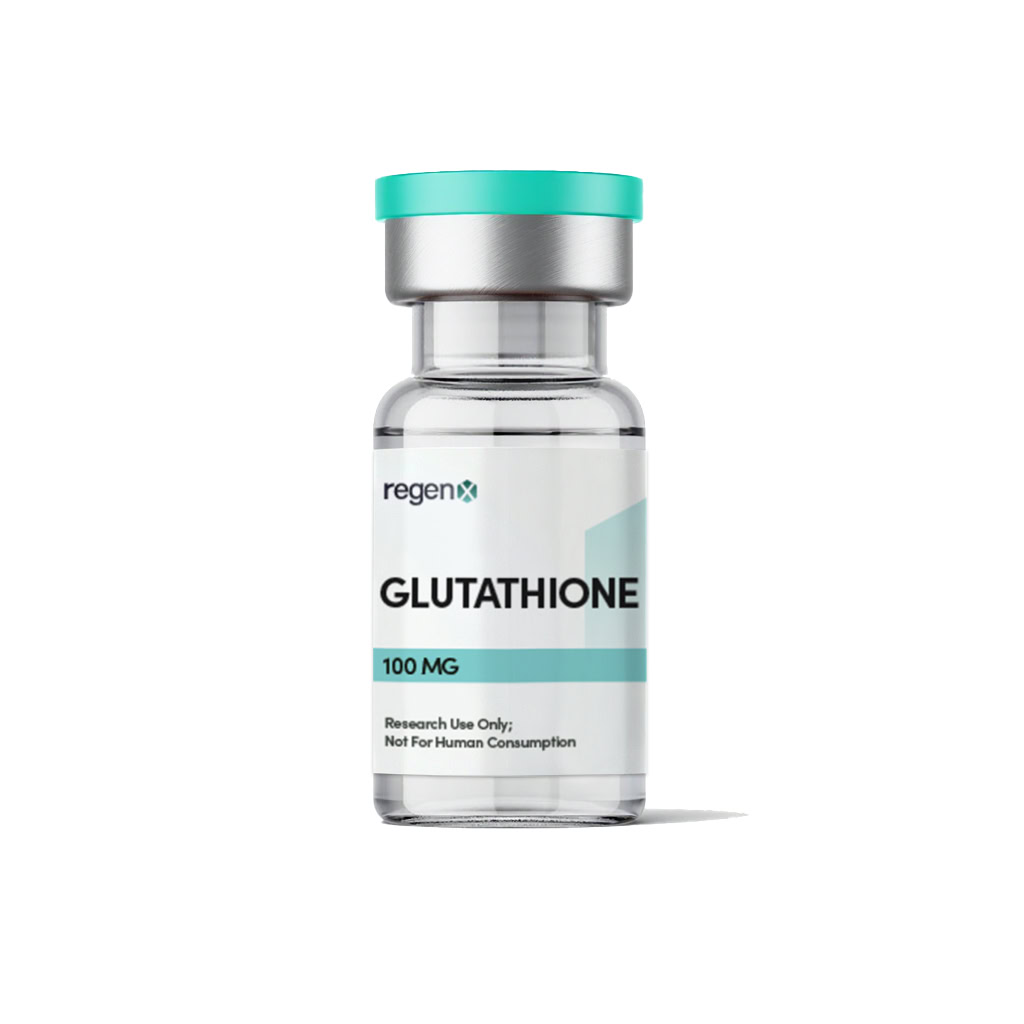
Glutathione functions as the primary intracellular antioxidant in many biological systems, maintaining redox homeostasis by directly scavenging reactive oxygen species and serving as a cofactor for glutathione peroxidases [1]. It also participates in conjugation reactions mediated by glutathione S-transferases, facilitating the detoxification of electrophilic compounds and xenobiotics [2]. The reduced (GSH) to oxidized (GSSG) glutathione ratio is commonly used as a biochemical marker of cellular oxidative stress in experimental models [3]. Due to these functions, glutathione is a core molecule in oxidative stress and cellular defense research.
Applications in Scientific Research
In laboratory and preclinical studies, glutathione is widely utilized in research focused on mitochondrial function, toxicology, neurobiology, and cellular aging. Investigations often explore its role in regulating apoptosis, maintaining protein thiol status, and modulating immune cell function under oxidative conditions [4]. Glutathione depletion and replenishment models are frequently employed to study oxidative damage, inflammation, and cellular resilience mechanisms [5]. Its involvement in redox-sensitive signaling pathways has also made glutathione relevant in cancer biology and metabolic research frameworks. This compound is intended exclusively for research and analytical applications and is not for human or veterinary use.
Referenced Citations
- Meister A., Anderson M.E. “Glutathione.” Annual Review of Biochemistry.
https://pubmed.ncbi.nlm.nih.gov/2862784/
- Hayes J.D., Pulford D.J. “The glutathione S-transferase supergene family.” Critical Reviews in Biochemistry and Molecular Biology.
https://pubmed.ncbi.nlm.nih.gov/10718343/
- Schafer F.Q., Buettner G.R. “Redox environment of the cell.” Free Radical Biology and Medicine.
https://pubmed.ncbi.nlm.nih.gov/11489637/
- Dröge W. “Free radicals in the physiological control of cell function.” Physiological Reviews.
https://pubmed.ncbi.nlm.nih.gov/7823229/
- Lu S.C. “Regulation of glutathione synthesis.” Molecular Aspects of Medicine.
https://pubmed.ncbi.nlm.nih.gov/16018992/