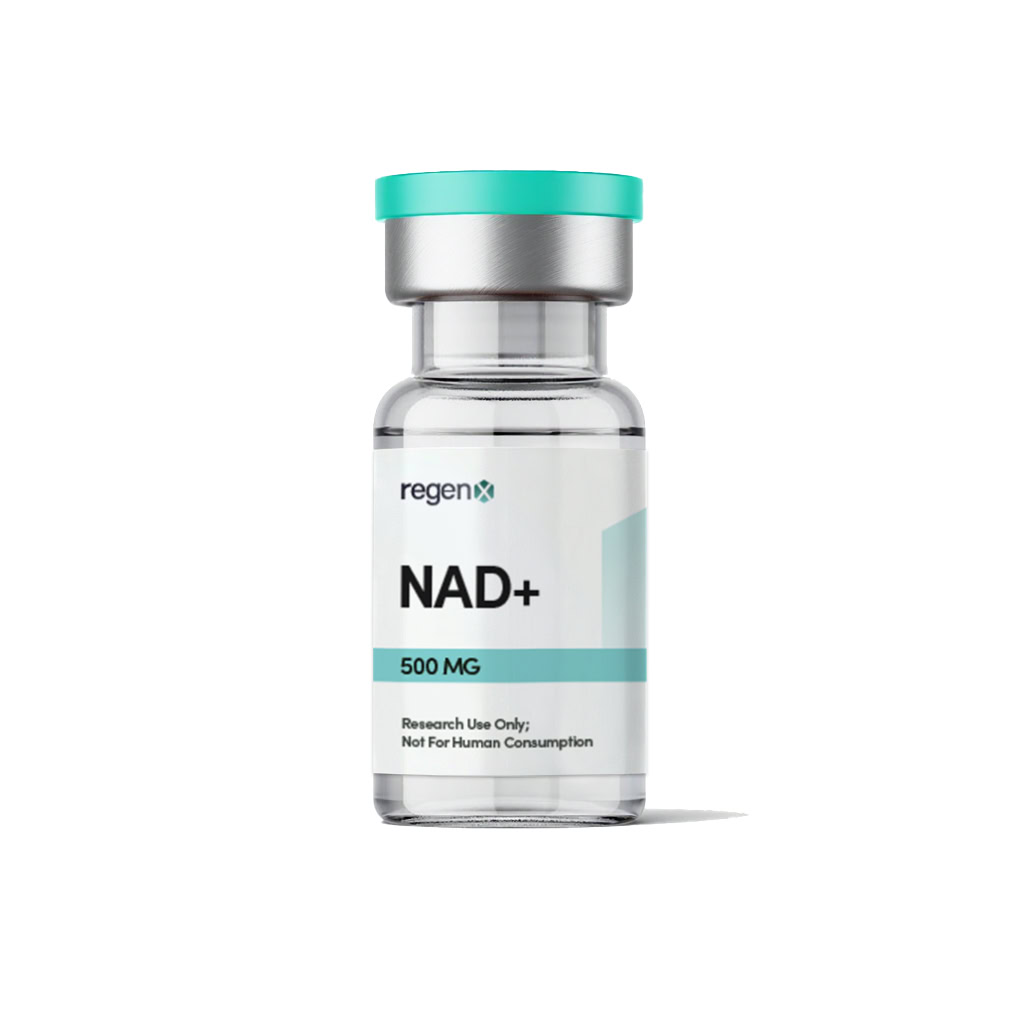
Research Overview
NAD⁺ functions as a critical coenzyme in oxidation–reduction reactions, enabling electron transfer in metabolic pathways such as glycolysis, the tricarboxylic acid cycle, and oxidative phosphorylation [1]. Beyond its metabolic role, NAD⁺ serves as a substrate for enzymes including sirtuins, PARPs, and CD38, which are involved in DNA repair, epigenetic regulation, and cellular signaling [2][3]. Declining intracellular NAD⁺ levels have been observed in multiple experimental aging and stress models, leading to significant interest in NAD⁺ biology across cellular metabolism and longevity-related research domains.
Applications in Scientific Research
In preclinical and in vitro research, NAD⁺ is commonly studied in models examining mitochondrial dynamics, oxidative stress, and genome stability. Research has explored its role in regulating sirtuin-mediated pathways, cellular senescence models, and adaptive responses to metabolic stress [4]. Additional studies investigate NAD⁺ turnover and salvage pathways involving nicotinamide phosphoribosyltransferase (NAMPT), highlighting its importance in maintaining intracellular NAD⁺ pools [5]. These findings have positioned NAD⁺ as a foundational molecule in metabolic, neurobiological, and aging-related research. This material is intended solely for research and analytical purposes and is not approved for human or veterinary use.
Referenced Citations
- Ying W. “NAD⁺/NADH and NADP⁺/NADPH in cellular functions and cell death.” Frontiers in Bioscience.
https://pubmed.ncbi.nlm.nih.gov/12700165/
- Imai S., Guarente L. “NAD⁺ and sirtuins in aging and disease.” Trends in Cell Biology.
https://pubmed.ncbi.nlm.nih.gov/20005395/
- Bürkle A. “Poly(ADP-ribose): the most elaborate metabolite of NAD⁺.” FEBS Journal.
https://pubmed.ncbi.nlm.nih.gov/20015068/
- Verdin E. “NAD⁺ in aging, metabolism, and neurodegeneration.” Science.
https://pubmed.ncbi.nlm.nih.gov/25908863/
- Revollo J.R. et al. “The NAD biosynthesis pathway mediated by NAMPT.” Journal of Biological Chemistry.
https://pubmed.ncbi.nlm.nih.gov/17923697/