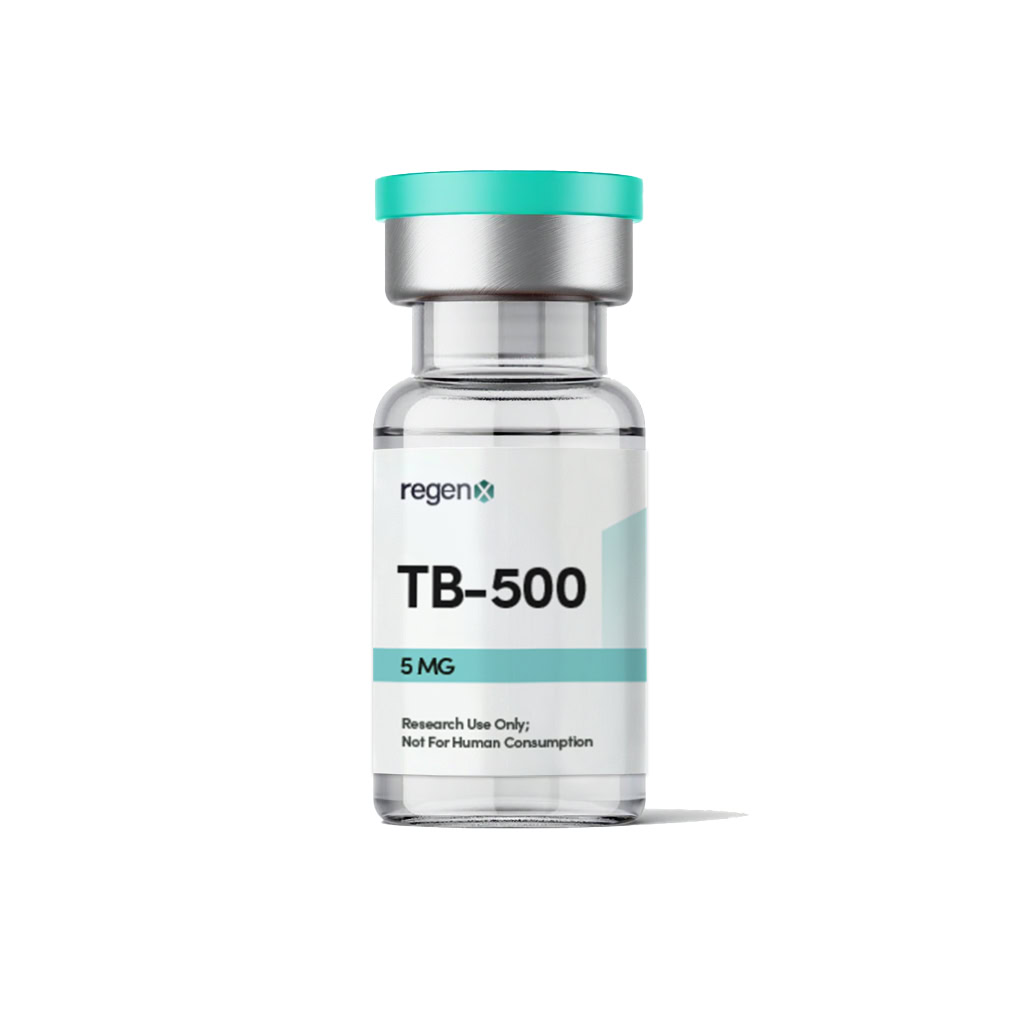
Research Overview
TB-500 is studied primarily for its role in cytoskeletal organization through interactions with G-actin, which influences cell shape, motility, and intracellular transport [1]. Preclinical studies have highlighted thymosin beta-4–derived peptides in models of tissue repair, vascular development, and inflammatory response modulation [2]. Research suggests TB-500 may support endothelial cell migration and neovascularization under controlled experimental conditions, making it relevant in angiogenesis and regenerative biology research. Additional studies have examined its effects on extracellular matrix organization and cellular stress responses, positioning TB-500 as a peptide of interest across multiple biological research domains [3].
Applications in Scientific Research
In laboratory and animal research models, TB-500 has been evaluated in musculoskeletal, cardiovascular, and dermal tissue studies. Published literature reports its investigation in skeletal muscle regeneration models, tendon and ligament research, and wound-healing frameworks, where cell migration and actin dynamics are critical factors [4][5]. Other studies have explored thymosin beta-4 fragments in cardiac and ocular research models, focusing on vascular repair and inflammatory signaling pathways [6]. These research findings have contributed to ongoing interest in TB-500 as a versatile tool for studying cellular movement, tissue organization, and adaptive repair mechanisms. This compound is not intended for human or veterinary use.
Referenced Citations
- Huff T. et al. “Thymosin beta-4 is a major actin-sequestering protein in cells.” Journal of Biological Chemistry.
https://pubmed.ncbi.nlm.nih.gov/11087763/
- Goldstein A.L. et al. “Thymosin beta-4: a multifunctional regenerative peptide.” Annals of the New York Academy of Sciences.
https://pubmed.ncbi.nlm.nih.gov/12480791/
- Smart N. et al. “Thymosin beta-4 induces adult epicardial progenitor mobilization.” Nature.
https://pubmed.ncbi.nlm.nih.gov/20190755/
- Malinda K.M. et al. “Thymosin beta-4 accelerates wound healing.” Journal of Investigative Dermatology.
https://pubmed.ncbi.nlm.nih.gov/11069615/
- Sosne G. et al. “Thymosin beta-4 promotes corneal wound healing.” Investigative Ophthalmology & Visual Science.
https://pubmed.ncbi.nlm.nih.gov/11923550/
- Bock-Marquette I. et al. “Thymosin beta-4 activates integrin-linked kinase.” Journal of Molecular and Cellular Cardiology.
https://pubmed.ncbi.nlm.nih.gov/16054694/